Beware Walled Gardens – Part 1

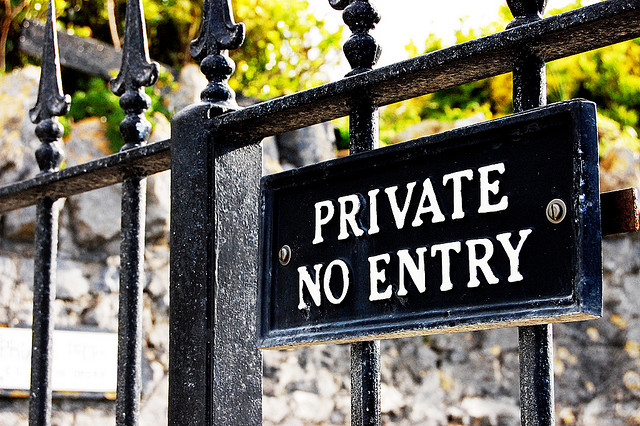
Walled Garden

This post is the first of a four two part series, initially prompted by the release of Diipo, a new Web2.0 learning platform. In writing it though, it has come to more accurately represent my current thinking about Virtual Learning Environments in a broader sense. I currently use Moodle in my own teaching practice but have, more and more, looked beyond it’s walls to find tools that do a better job.

The trouble with VLEs

Diipo’s about page explains that it brings together social networking, blogging, online collaboration, file sharing, as well as the kitchen sink. It also boasts a secure environment allaying (the usual) fears about privacy and safeguarding. The combination of tools wrapped up inside a secure environment may provide convenience as well as reassurance, but at the same time, a walled garden is created. The wall separates the learner from the real world and often puts their learning inside of a silo, where it can be difficult to get information both in and out of. Moreover, as Colin Maxwell argues: “they’re (VLEs) closed environments, and only teachers and registered students can access them – but education happens everywhere and shouldn’t have these boundaries.” I couldn’t agree more having already argued that education needs to be given back to the people (en mass) not locked away.

This is not to say that all VLEs are bad. They have their place and some are used really well; you only have to look at the Open University to find evidence of this. Their VLE is accessed by a significant number of learners from around the globe, logging on, choosing to get their education online rather than from within the confines of traditional institutions.

However, many VLEs become nothing more than web based content management systems. They offer little in the way of effective learning and can turn learners off as much as they could potentially engage them. Doug Belshaw, interviewed at the Plymouth e-Learning Conference, suggested that learners do not necessarily want to have another place to put things… and went on to ask the question: should we not go to where the learners already are?

While Diipo, Moodle and other learning platforms offer a variety of learning solutions in one neat package it is my contention that the same is offered openly on the web in more relevant and manageable applications.

Social networking

In case you haven’t noticed Facebook and Twitter do social networking really well. All of my students use Facebook and quite a number of them use Twitter. Why would I choose to engage them in a social network that has zero credibility when they are already participating in the two most powerful and engaging online communities that exist? Privacy? Safe guarding? The fact is that Facebook and Twitter are part of young people’s lives. They spend a significant amount of time using them and so do many adults, including their parents. By blocking Facebook and Twitter in schools (as is done with many other aspects of the World Wide Web) we simply reinforce the message that schools are for learning and that anything you learn outside of the classroom (physical or virtual) is not as valid. Well, we surely don’t believe that, do we?.

Learning is changing; where and when learning happens is shifting. It’s time that more of us (educators/learners) begin to address this shift and consider ways to plan for what Dean Groom has coined “downtime-learning“. A number of schools and universities are effectively doing this, using Facebook and Twitter to keep students and parents informed about events, key dates and setting homework. Some, have gone further creating study groups and completing assessments online. Just take a look at Nottingham Trent University’s Facebook page to get a flavour of its potential and both Yale’s and Johns Hopkin’s Twitter streams are goldmines of useful information, available to not just their own students but anyone who chooses to follow them.

By following some straightforward rules Facebook and Twitter can be used by both teachers and students without putting either party in jeopardy. There is no need to be ignorant when there is plenty of guidance available about how to harness the power of social networking safely.

Embracing social networking as a useful and valid learning tool can remove many of the earlier mentioned barriers, and open learners up to a broader spectrum of thought. The truth is that  many of your students already discuss their homework with each other while they are on Facebook. Mine do, all the time. What else could they be discussing/doing while they are logged in? I actively encourage my A-Level Media students to put their finished films on Facebook as it will be the quickest and most effective way of generating the feedback they need to complete their evaluations. I’m not logged in, I’m not chatting with them online, but I am saying to them Facebook is good, it has value, harness its power.

A global classroom

Facebook (600 million users) and Twitter (200 million) represent a significant portion of the world. And the world is the biggest classroom there is. As we prepare young people to be successful within a global community should we not teach them within that community rather than shutting them off from it for seven hours each day? When they leave my class they go online (via 3G) and when they go home they log on. I can’t control this, nor can their parents to some extent. What I can do however is teach them to be responsible and safe when they are there; helping them to use the World Wide Web to improve their learning, to improve their lives.

Diipo, Moodle, Blackboard do little more than put walls around learning keeping the selected few in and the rest of the world out. They reinforce the traditional notion of teacher directed learning, of school based education. If schools do kill creativity, as argued by Ken Robinson, do VLEs contribute to this? Should we be defining when and where learning takes place? Learning can (and should) happen wherever the learner is. Perhaps, it’s time we went to them rather than the other way around?


Coming up in part two: collaboration, assessment and why Google’s myriad of apps is a better deal than Diipo, Moodle or Blackboard.

Image: Guimo on Flickr

Desk!

Desk

Here is my desk. As you can see it is positioned facing towards the wall, away from the class.

The desk is faced this way as I have no need of it during my lessons other than to be a home for my laptop. While my lesson is taking place, more often than not, you will find me, in amongst my students, working with them, talking to them, guiding them.

A desk and a comfy chair can be very tempting, particularly towards the end of a long day. It can be easy to slip behind it and teach from there, but that is not good teaching and will certainly not encourage good learning. Don’t let your desk become a barrier between you and your students. For me, this was the first mistake David Starkey made in ‘Jamie’s Dream School’, he went in with an ‘us and them’ attitude, setting a desk in front of himself as a barrier; orating from the front. Instant fail!

If I didn’t need to attach my laptop the board I would seriously consider removing the desk all together. Could you live without yours? Why not try it and see?

—

Oh, and yes the Glee calendar is mine, let the abuse begin!

Busting a hole in the wall (the purpose of education)

purposed-badgeWhen Sugata Mitra put a computer inside a hole in the wall of the NIIT building in New Delhi, he took the first step in proving beyond a shadow of a doubt, that education was a universal connector craved by people the world over; and that the traditional notion of classroom education was by no means the only way to do it. Now, more than ten years on from the beginning of the HITW experiment, the lessons remain unheeded by many of the people involved in mainstream education. In fact, concepts such as ‘self-directed learning’ and ‘the student voice’ are still scoffed at as Dawn Hallybone was reminded this past week, attending a debate on the National Curriculum review.

Are there still that many people connected to education that truly believe, we, the adults know what’s best for the next generation and the one after that? Nick Dennis spoke of the need for us to focus on principles in this debate and at first I disagreed, as principles like ‘purposes’ are rarely universally shared. However, I now see where he was going, and while I appreciated Doug’s question about whose “better” was Nick referring to, I think Nick’s conviction was what was most important. He asked the big questions about what we want education to be and what we are doing for each other as a community, not as definable roles but as human beings.

It is make or break time for humanity and we have a responsibility to draw a line in the sand, admit our mistakes and create a system of education that can begin to undo the harm that we have done to the world. For all the talk over the last twenty years of the ‘global village’, it has not stopped us continuing to destroy our planet, to wage wars and to continue to ignore the inequalities in society. What is the purpose of education? Surely, it is to create unity by helping future generation to recognise the values that humanity share.

Fred Garnett grapsed this when he argued that new (social) media can foster “collaborative, discursive learning, the kind of learning that creates a healthy, open and participative society.” Is this the extension of Mitra’s experiment? Is social media the natural evolution bringing learners to the stream rather than the well? Some of us embrace change, recognising the merits of experimentation and creativity; others fear it, seeing new as dangerous. I’m not suggesting that we should plunge head first into wildly unstructured models of learning but if it were not for people who dared to be creative, who dared to experiment, we would not be able to stare into the vast ocean that is our solar system, or be able to listen to Mozart on a device, so small, it can fit into the palms of our hands.

When Mitra began his experiment he was giving education back to the people and his observations of the children showed happy, creative, collaborative learnings, the sort of learning Tom Barrett hopes his son will continue to experience. I’d intended to say that education is about more than opening doors; it’s about what you do once the door is open. Now I’m asking who needs doors? Why not work together and bust a hole in the wall instead?

10 things I’ve learned in a year of blogging

Number One

I started this blog one year ago today. When I published the first post I was very unsure about whether I would be able to commit to blogging on a regular basis but now can’t imagine not doing it. It has become an extension of my brain – a place where I can explore ideas; share experiences and reflect on my learning. As an educator the learning never stops and a blog (IMO) is the best way to document and focus the learning experience. Along the way I have learned a lot about blogging and so I’ve decided to share some of what I’ve learned, today, on my blog’s birthday. Here goes:

1. It’s what you write that matters

The most important feature of your blog is what you write. I know that this sounds obvious but I can attest to the fact that it is easy to get bogged down in worrying more about the look and feel of your blog than the content you are putting out. My advice? Find a blog theme that is clean and offers your readers a clear reading experience. Stick to sans-serif fonts and a high level of contrast between the text and your blog background. Don’t obsess about images, buttons and other features. Focus on the writing and the rest will follow. After all, the people who will become regular readers of your blog will not care about the way your blog looks. In fact the people who become return visitors will probably subscribe by RSS and therefore not even read your blog via your actual site. Pick interesting topics to write about. Find your own writing style. And don’t be afraid to borrow from others while you are finding your own voice.

2. It’s okay to post at your own pace

Starting a blog can be intimidating. Particularly when you see that some bloggers post at least once a day, sometimes more. I originally set out thinking that I would blog at least five times a week but I quickly realised that for me this was unrealistic. I have settled into a far more organic rhythm publishing an average of six posts a month. How often I post is affected by a number of factors but mainly by my workload.

I write when I feel compelled. I shelve posts occasionally to let them simmer, returning to them with a clearer sense of what I wish to convey. Sometimes an idea for a post will go from first draft to published post in less than a couple of hours. Other times they will go through multiple drafts until I am happy. Remember that quality is far more important than quantity. If you would like to know more about my writing process and how I find focus check out the following two posts:

3. It’s important to post material that is provocative (from time to time)

I’m not suggesting here that you set your stall out to… but it will come as no surprise that many of my most read posts are the ones that were a little contentious, that focused on challenging issues where others will certainly have an opinion. And it is also good to pick up on topics that are being readily discussed. Here are some examples of posts that caught fire:

4. Make sure your about page is up to scratch

The about page on your blog is arguably one of the most important pages as many new readers who come across your blog will want to know more about it and the person behind it. Who are you? Why do you write this blog? How often can they expect to see new posts? These are just some of the questions a new reader may have. I am working on improving my about page at the moment, using this guide.

5. Minimal design helps your readers to focus on the content

I am at heart a minimalist. If this was nothing more than a personal journal it would probably look more like this. However, this level of minimalism is a step to far (less?) for my blog which is as much an online portfolio as it is a reflective journal. Therefore, I have found a compromise, balancing minimalism with important features that help my readers navigate my blog and hopefully keep them there. These include static pages listed in a menu under the header, a range of methods for readers to find interesting posts including: categories, tags, recent posts and a blog archive. I currently use the WordPress theme: Plainscape, which I have tweaked to my liking adding a few unique features, but these are minor and took very little time to put in place.

6. Harness social networks to spread the word

If you wish to grow the number of visitors to your blog you must harness the power of social networks. Twitter has been one of the most powerful tools in driving people towards my blog content and had helped connect me with many other bloggers who share similar ideas and write about similar topics. This has helped me to develop my blogging practice while also giving me a network who read and retweet my blog posts. I use Feedburner to manage my blog feed and Twitterfeed to autopost it to Twitter. After more than a year of sharing my disdain for Facebook, I have reneged on my principles, reactivated my account and established a Facebook page for my blog, here’s why.

7. Remember it’s not all about you

Let your readers know what blogs you like to read, this is very easy to do as most blogging platforms include a blog roll feature. I also use a range of tools including Google Reader, Delicious and Amplify to share things that I have been reading and I feel will be of interest to the people that read my blog. To make it easy for them to find this information I have installed the Lifestream plugin and generated a page on my blog to display this information.

8. It is about discussion

Most bloggers are looking to generate discussion around their posts. This is what the blogging thing is all about and it’s really important that you respond to comments from people. I would advise that you install the Disqus commenting system to your blog. It offers a wide range of management features for comments on your blog allowing anyone to log in and comment on your blog while being an effective tool in blocking spam. I try to reply to comments within 24 hours although occasionally life gets in the way.

The commenting does not end there though. As I have already made clear, it is not all about you. If you want to drive people towards your blog and encourage them to comment on your own posts then you must comment on other people’s blog posts. It raises your profile amongst the blogging community and will encourage people to look up your blog when they have seen you comment on their own posts. Be careful though and avoid committing any commenting faux pas, use this post as a guide about what not to do when commenting on posts.

9. Understand SEO and analytics

Without going into too much detail, if you are serious about blogging and see it as more than an opportunity to collect your thoughts then it is worth taking a bit of time to understand ‘Search Engine Optimisation’. In very basic terms this is making your blog more visible to search engines like Google. I could end up writing an entire post on this and only scratch the surface in many ways. Instead I will simply say that this post is a good place to start and if you are using WordPress then you can make a decent start by installing the following two plugins: All in One SEO Pack | Google XML Sitemaps

To really get a handle on how your blog is doing it is also worth signing up to Google analytics. Again there is a very handy WordPress plugin to help with this.

10. Learn a little HTML

This one is going to be a bit geeky but for that I make no apologies. When it comes to my blog I decided from the outset that I was not going to compromise when it came to way that my blogged worked and looked. I knew that if I was going to really have control of my blog I needed to learn some of the basics of HyperText Markup Language (HTML). Having started this blog initially on Blogger there were not as many features in the editing window as WordPress and one thing that niggled me about my posts was that links would open in the same window. This resulted in me learning my first bit of HTML. To get the links I was including in posts to open in a new window I learned to add the following HTML tag: target=”_blank”. From there I gradually learned more HTML so that I could effectively tweak my blog’s theme and code my own buttons in both my blog’s sidebar and under each post. I have blogged and shared the HTML/Javascript for two buttons that I addapted the code for:

This site is an excellent place to start learning HTML and it allows you to test out your code before you go and try it on your blog.

And with that I will bring this post to an end. I’ve thoroughly enjoyed the last twelve months of blogging and I’m very excited about the next twelve. I’ve got some fantastic projects underway at the moment and I’m also right in the middle of my MA, so expect lots more posts over the next few months!

—

Image: inf3ktion on Flickr

More on the challenges facing education…

Having shared some of my thoughts on the challenges facing education on Friday, I have spent the last couple of days reading and commenting on a number of the fantastic purpos/ed posts submitted by educators across the web as part of Doug Belshaw and Andy Stews’ #500words campaign.

One post that really grabbed my attention was Fred Garnett’s post: ‘The Purpose of Education’. Fred suggest that our position as subjects rather than citizens has significantly impacted on our acceptance of the ‘National Curriculum’ for this long. He also, draws upon many different voices including Pat Kane and Sugata Mitra to help add clarity to his belief that education needs to be far more democratic built upon collaboration and learners’ interests.  It was Fred’s reflection on his own teaching experiences though that really made me think and forced me to comment on the post:

Having taught Politics to rich kids in the USA and then Computing to poor kids in Lewisham I concluded that the only difference between them was that the poor kids expected to fail. I decided that I should focus on motivating them to believe in themselves rather than burying them with curriculum facts.

This got me thinking (particularly in terms of school based education) that the challenges facing education are effected by the wealth of the area/community in which a particular school exists.

I asked Fred if it was okay for me to republish my reply here and he enthusiastically said yes. Below is a slightly edited version of my response to Fred’s post, you can read the post and see my response in its original context here.

—

Education: A dichotomy of challenges?

Great post Fred, I think your contrasting teaching experiences in the US and here in the UK highlight two distinct challenges that face educators today.

Challenge one is faced by educators teaching in communities where ‘expected failure’ has become the norm and thus turned a community (particularly the young) against education. They don’t see being smart and learning as ‘cool’. To them learning reeks of potential failure and so they ridicule it, diminishing its value (in their eyes).

Challenge two is faced by educators in far more affluent areas where young people have greater opportunities and value their time in school, not necessarily for the learning experiences but for the grades that they wish to achieve in order to take the next steps towards their ‘expected future success’.

Educators who find themselves facing one of these challenges have an equally difficult path to tread.

Educators facing challenge one have the inarguably difficult task on motivating young people who see little or no value in education – reinforced not only by their peers but by parents, by their neighbourhood, by the lack of opportunities within their community. They have to find ways to show them that they can be successful and to raise their expectations.

Educators facing challenge two on the other hand have to fight apathy from some while helping many others to understand that failure is a valid and valuable learning experience. This is difficult because it is not just the students who see failure as a bad thing, it is the parents, other teachers and the government who have fostered a society that judges success based on grades and financial worth.

To put this into an equation: Better grades + Better University = Financial Success.

With this mindset firmly entrenched it is exceptionally difficult to convince some youngsters that they can learn as much from failing as they can from succeeding. The conceptual logic for many is beyond them.

And these two challenges are not separate sides of a coin. In fact they are indelibly intertwined. The parents of challenge two children place them in direct opposition to the children of challenge one, and vice versa. Children who believe that failure is unacceptable tend to look down on those who fail and this show little empathy towards poorer people for example (I am massively generalising here) and in turn children who see success as unachievable sneer and mock those people who in society seem to be successful (all be it financially).

A society divided

So, where am I going with this? I think that education has to be about opening doors for people of all walks of life. It has to transcend culture, religion, wealth, race, age and so on. But to do that society has to change. The biggest challenge facing education and the one that will have the hugest impact on helping to decide what the purpose of education is, is whether or not the richest and the poorest in society can stop seeing each other as different and find common ground. Perhaps the common ground should be education, perhaps schools are the place for this common ground to be forged, perhaps schools need to be opened up and put right at the centre of each and every community? Perhaps schools can help mend a divided society?

Centres of Learning

I have been following with interest the furore over the potential closure of many public libraries. Some have suggested that a potential solution would be for the local school library to be used by the public as well. Some thought this sounded great, others were horrified by the idea convinced that it would put children at risk. Have we gone mad? Are young people not around adults all of the time when they leave school at 3:30? Do we really believe that every single adult who walks into a school is a child molester or pedophile? I think that the idea of making the school library the public library is a stunning idea. I think we should go further and rebrand our schools as ‘Centres of Learning’ where anyone of any age can come and take classes, use the library, gain access to IT equipment. Why should a child of 14 not sit next to an adult of 44 and learn French. I am sure when the 14 year old turns around to the 44 year old and asks why they are here, the answer will be as valuable learning experience as any – particularly as that answer would likely be: “because I wished that I had learned it when I was in school.”

Think of the potential value of young people sharing their resources with their elders; their parents and their grandparents. They can teach each other. I think as a society we have forgotten what a community is. I think we have forgotten to value all types of learning putting education solely on the hands of the government and schools. Education belongs to the community – to the people – it is for everyone!

—

If you want to read more on the purpose of education and the challenges facing it check out all of the #500words posts here. Along side Fred Garnetts post, other notable posts (IMO) include Tom Barrett’s very personal post: ‘What is the purpose of education?’ (with 34 comments and counting) and Dean Groom’s unique take: ‘purpos/ed’, applying his knowledge of games design to the question.