A daily ritual that I have observed for several years now is to begin each day by reading from selected philosophical and theological texts. Last year, alongside revisiting the Stoics, I managed to give myself a grounding in Taoism, Confucianism and Buddhism. I supplemented these with some early Christian monasticism and the maxims of the 17th Century philosopher Baltasar Gracián.1
Gracián, Baltasar: The Pocket Oracle and Art of Prudence
Mascaro, Juan: The Dhammapada
Seneca: Letters from a Stoic (r)
Tzu, Lao: Tao Te Ching
Walker, Brian Browne: Hua Hu Ching: The Unknown Teachings of Lao Tzu
Ward, Benedicta: The Desert Fathers: Sayings of the Early Christian Monks
I have begun 2021 with fewer texts, covering a wider range of subjects and ideas. Alongside Aurelius and Seneca, I am going to re-read specific sections of the bible; take a broader look at Western philosophy3; and also read Stephen King’s ‘On Writing‘ which has been sitting unread in my Kindle Library for over a year. Not a philosophical text per se, but one that I hope will go some way to helping me achieve one of my goals for 2021.
I feel that I have a firm understanding of Stoicism. And from sixteen years of teaching A-Level Literature and Media Studies, a sound understanding of more modern philosophies, particularly romanticism, modernism and post-modernism. My knowledge of various religions is good and I have a reasonable grounding in Eastern philosophies and theology but there are significant gaps in my understanding of Western philosophy. I hope that Bertrand Russell’s much lauded (and criticised) book can help begin to plug those gaps.[↩]
‘Reading more’ was not one of my goals for 2020, yet it was my best year for reading in a long time. I’m sure the lockdown contributed to this but I am pleased that I maintained my momentum once I returned to a fully open school in September. On top of the 41 books listed below, I also read over 1,500 articles from The Guardian, as well as countless blog posts and articles from across the web. A good year all round, and one that at least from this point of view, I feel much richer for.
Adams, Douglas: The Hitchhikers Guide to the Galaxy (r1)
Adams, Douglas: The Restaurant at the End of the Universe (r)
Adams, Douglas: Life, the Universe and Everything (r)
Aurelius, Marcus: Meditations (r)
Confucius: The Analects
Dexter, Colin: Last Bus to Woodstock
Dexter, Colin: Last Seen Wearing
Dexter, Colin: The Silent World of Nicholas Quinn
Dexter, Colin: Service of All the Dead
Dickens, Charles: A Christmas Carol (r)
Epictetus: Discourses and Selected Writings (r)
Gracián, Baltasar: The Pocket Oracle and Art of Prudence
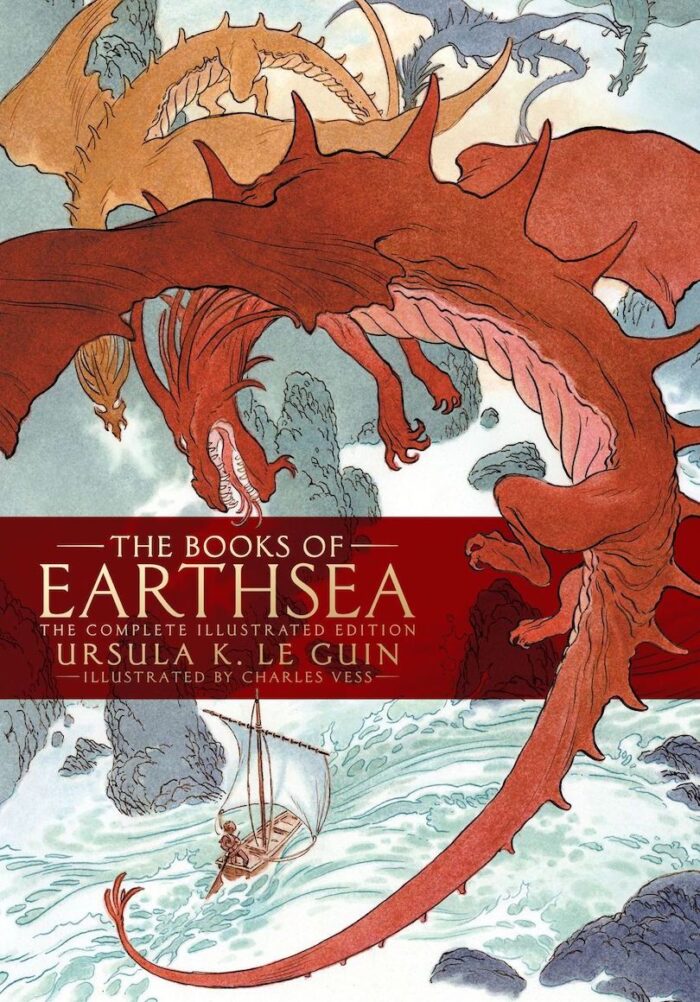
This completed my first reading of the entire ‘Earthsea Cycle‘. I read the first three novels in 2019 and took a break but I was very happy to rejoin Ged and Tenar; not least due to the revisioning Le Guin undertook returning to Earthsea eighteen years after ’The Farthest Shore.‘ Her exploration of womanhood and female empowerment from ’Tehanu‘; through ’The Finder‘ and ’Dragonfly‘; culminating in ’The Other Wind‘ was deeply gratifying. I admire Le Guin’s bravery in returning to a world she had firmly established and to then completely redefine it.[↩]
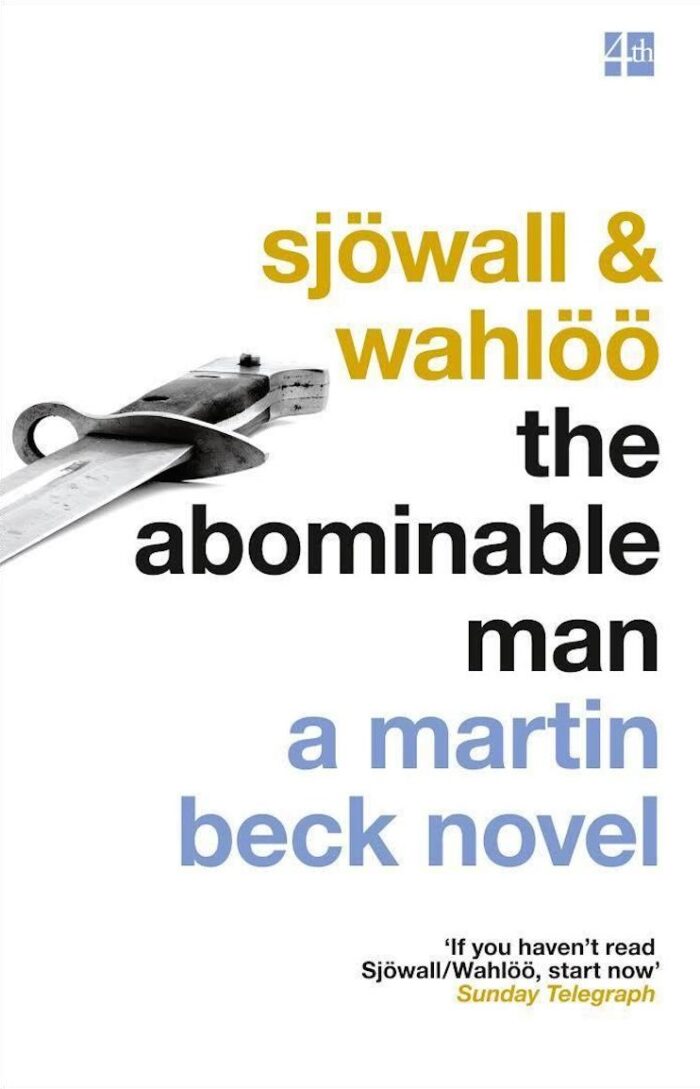
It was very satisfying to immerse myself in such a tightly constructed sequence of crime novels; and interesting to read the series that established nordic–noir as a genre.[↩]
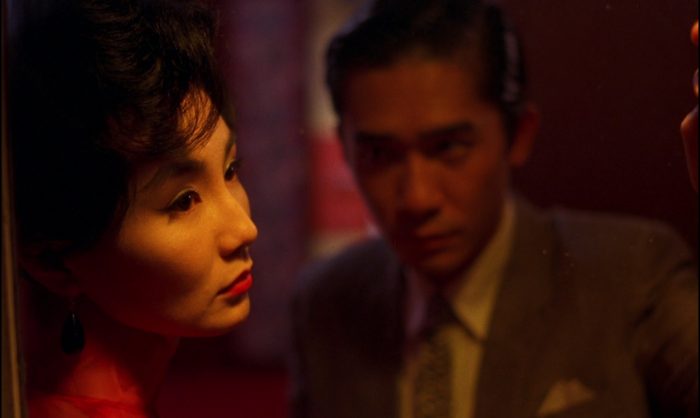
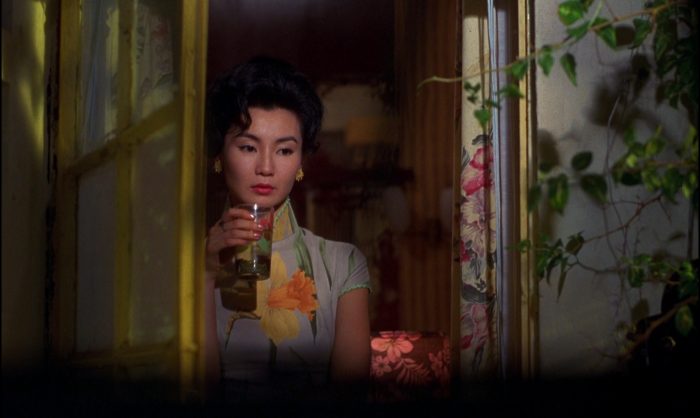
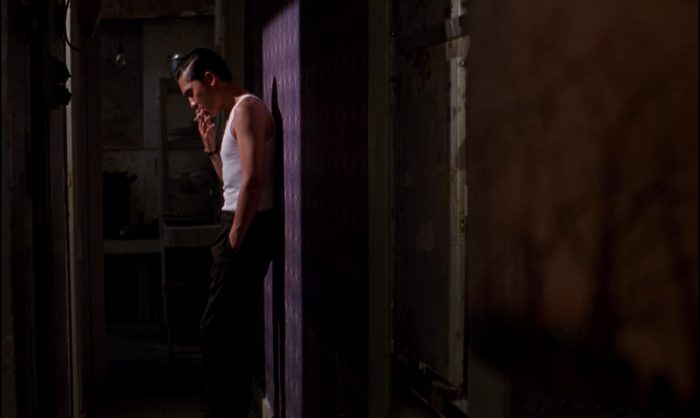
Jennifer and I ushered in the Christmas break by treating ourselves to Chinese food and watching ‘In theMood for Love’ by Wong Kar-Wai. It is a personal favourite; and one that we have enjoyed together for as long as we have been a couple.
Built on a modest premise, Wong meticulously depicts the heartbreaking (unrequited) romance between Su Le-zhen (Maggie Cheung) and Chow Mo-wan (Tony Leung). Moving into next-door apartments with their spouses, they come to the unhappy realisation that their respective partners are cheating on them with each other. They consider the possibility of their own affair but agree they will not act on their feelings for each other, lest they be “no better than they are.”
The film’s impact is indebted to its modesty. The romance between the two leads evolves in vignettes: glancing looks, passing comments and brief encounters are all we are given for the first thirty minutes of the film. They only begin to spend more time in each other’s company once they admit the truth of their spouses’ infidelity. Yet, they never act on their true feelings for each other. As Roger Ebert noted, reviewing the film in 2001: “whole continents of emotions go unexplored”. Wong reinforces this narratively, skipping from event to event the connective tissue is discarded leaving space for the viewer to fill in the gaps. Like a good Hemingway novel, what is not said (or seen) is as important as what is.
As moving as the romance between the two leads is, this is not why I so frequently return to the film. ‘In the Mood for Love’ is a mood piece about Hong Kong in 1962. The soul of the film belongs to the city itself. The cinematography, mise-en-scène and music are expertly matched, capturing the city and its inhabitants in a very specific time and place. Drawing inspiration aesthetically from film noir (Wilder, Preminger), minimalism (Bresson) and narratively from Hitchcock (Vertigo/Rear Window), the Hong Kong of Wong’s childhood is rendered mysterious and alluring with a dream-like quality that is intensely beguiling.
Shots linger, focussing on consequential and inconsequential details alike, and the pacing is deliberately slow. Even the many iconic tracking shots of Maggie Cheung, on her way to buy wonton noodles, add to the static, dreamlike quality of the film. As Wong put it himself: “We tried to recreate the film from our memories. And in our memories, everything moves much slower.” Filmed almost exclusively in medium shots and close ups, you are never quite sure where or when events are taking place; the scenes “surface and then submerge back into the murk of memory” (Steve Erickson, 2012). Low angles, and carefully positioned shots placed just outside windows or inside doorways create an intimacy with each location; placing the viewer in situ with the surroundings and characters.
Wong’s canvas is painted in saturated colours and musky hues. It is in one moment vibrant and the next shadowy and subdued. The props and costumes are similarly contrasting; Jadeite vases and cups standout against backdrops of deep reds and browns and the cheongsams worn by Maggie Cheung shift between warm and cold colours reflecting the changing mood of the film’s narrative. The music that complements the visual aesthetic is a mixture of perfectly timed pieces that capture a city caught between its past and present. Chinese opera and classics of the solitary island period sit comfortably alongside the gentle warmth of Nat King Cole. Yet it’s the haunting melody of Yumeji’s Theme that most accurately conveys the nostalgic, meditative atmosphere.
Every time I watch the film, I am struck by its contradictory nature. Exotic, yet universal; subtle, yet bold; it is a masterpiece of filmmaking that succeeds in being both mysterious and seductive. The streets, apartments, offices and noodle bars of 1960s Hong Kong are brought to life; and they are both gritty and romanticised. Through Wong’s dreamy, voyeuristic lens, the city becomes a part of your own memories.
He remembers those vanished years. As though looking through a dusty window pane, the past is something he could see, but not touch. And everything he sees is blurred and indistinct.
I have been relatively silent amidst the turmoil that has arisen out of the collective deep-breath forced upon us by the pandemic. Where I initially saw hope for change, it was quickly cancelled by an onslaught of rhetoric on both sides of the aisle that left no room for mercy, compassion and tolerance.
Race, gender, religion, wealth: All topics fraught with difficulty at the best of times and I have struggled to fully form the words I would use to express how I feel about any of these issues in the current climate. However, Nick Cave has come to my rescue responding to questions about ‘mercy’ and ‘cancel culture‘ on his blog…
Mercy is a value that should be at the heart of any functioning and tolerant society. Mercy ultimately acknowledges that we are all imperfect and in doing so allows us the oxygen to breathe — to feel protected within a society, through our mutual fallibility. Without mercy a society loses its soul, and devours itself…
As far as I can see, cancel culture is mercy’s antithesis. Political correctness has grown to become the unhappiest religion in the world. Its once honourable attempt to reimagine our society in a more equitable way now embodies all the worst aspects that religion has to offer (and none of the beauty) — moral certainty and self-righteousness shorn even of the capacity for redemption. It has become quite literally, bad religion run amuck.
And there it is…
We cannot and should not deny our history, nor should we try to remove it as if it never happened. If society is to be equal, we must work openly to build a wider more honest narrative about our histories – good or bad. We must ensure that education provides the opportunity for people of all cultures and backgrounds to learn and debate ideas free from persecution.
But if we seek to simply cancel out the pieces of our past that we are angry about or not proud of, we will replace one biased view of the world with another. You can only redeem yourself when you are able to acknowledge your mistakes. As humans, we are more likely to do that, in a society that is open and merciful.
—
N.B. None of this is to say that I don’t appreciate the deeply held anger felt by so many people due to the way their gender, race, religion, sexual preference, et al, has been and continues to be treated. The struggle is real. However, we must strive to be better than those who came before us and not allow our baser instincts to drive our actions and decisions as we seek to make society a more fair and equal place for generations to come.
As Merlin Mann likes to say, Tuesday is the optimistic day. So here’s a dose of optimism for Tuesday 12th May, 2020.
The latest episode of Reasons to be Cheerful features an interview with historian Rutger Bregman about his upcoming book: Humankind.
In the clip below, Bregman argues that our default view of humanity is a pessimistic one. A view that he believes has been cultivated over the centuries to benefit those in power. He goes on to say that making more positive assumptions about humanity can therefore be considered both revolutionary and dangerous.
“Who benefits from this cynical view of human nature? The answer is simple. It is those in power… The argument that people are actually pretty decent is a really dangerous idea.”@rcbregman on this week’s episode. Listen at https://t.co/BrVgmsAbmJpic.twitter.com/3GHdwCb2pY
— Reasons to be Cheerful (@CheerfulPodcast) May 11, 2020
This is a thought provoking perspective that is definitely worth consideration. Our democracy is founded on deeply entrenched structures that have allowed the rich and powerful to maintain social inequality. Religious institutions, the monarchy, and the government have and do rely on our need to be governed. No revolution has ever resulted in the people choosing to go without some form of rule. One form of governance is simply replaced by another.
What if we tore up the rule book and decided to structure society in a completely different way? We don’t have to overthrow the government to do it. At least, not straight away! 😉
Since the onset of the global pandemic, we have witnessed the human capacity to do good in multitudes. In the UK, for example, private companies have used their capital, expertise and resources to help in the fight against Covid-19 by building ventilators. Schools and other business have donated personal protective equipment to help protect nurses and doctors working on the frontline. Local communities have come together in earnest to support each other, delivering food and medicines to those who are most vulnerable.
With the ‘milk of human kindness’ so readily on display, surely we can create a kinder, more humane society? A society that is less “chartered”. A society that is equitable and open, where the rules to which we adhere are based on the needs of the many not just the few.
Idealistic? Maybe. But Bregman’s views about humankind are not unfounded. To explore them further, begin with this adapted excerpt from his book about a real life Lord of the Flies. Spoiler Alert: The boys do not turn savage and murderous. Instead, their tale is one of “friendship and loyalty”. You can follow that with this essay on the decency of humanity, published in The Correspondent. We’re hardwired to help each other.